




Tekst piosenki
[Intro]
(And they say, and they say)
What they say, what they say now? (They say, they say, they say)
Uh-huh, uh-huh
(They say, they say, they say-ay-ay-ay)
I’d like to welcome everybody out to the samurai
(They say, they say, they say)
Indeed, indeed, indeed, indeed, baby
Here we go, one time
Yeah
[Chorus]
I got these
Really neat (Really neat, really neat)
Very beautifully alliterated (Very beautiful) (Uh)
Little battle raps for you (Little battle rap, little battle rap, yeah)
I got these
Really neat (What you got?) (Huh) (Uh)
Very beautifully alliterated (Yeah, yeah, yeah)
Little battle raps for you (Talk to ’em like) (C’mon)
So come on through
[Verse 1]
Big eyes looking like skies in binoculars, two nights live
Singing by the opera house, but not in it, just by it
Someone alongside it
A long silence
A strong, vibrant meditative song of guidance
Designed to raise eyelids of blind men
Saved assignments
With warm regards and age kindness for today’s climate
And the vain of gang violence meets the gangs’s demises
And it— bangs!
Rises like wings on a plane
Plus a pilot who can fly it into the eye of Hurricane Iris
Style it, same shoe in different sizes
Wear evidences of the mileage and the growth
Top hats and coats
Tuxedos and throats, where the bowties posts
Folks look past the lower-class blower of the notes
And tell unspoke jokes as they approach
Which she’d never be inside, but she hopes
[Chorus]
I got these (Yeah)
Really neat (Really neat, really neat)
Very beautifully alliterated (Very beautiful) (Uh)
Little battle raps for you (Little battle rap, little battle rap, yeah)
I got these
Really neat (Really neat) (Huh)
Very beautifully alliterated (Wassup, wassup)
Little battle raps for you (Yea, uh, uh)
So come on through
[Verse 2]
The unamplified, fantasize land of the soon-to-be fans of the samurai
Smile wide, got the panorama camera vibe
If you analyze, she’s a one-woman gala, glamorized
Just without the glamor or the gala ties
Met ’em all live with the jazz guys eating piano pies at the Vanguard
She’s a artist and starved
A couple dollars in the band jar buys a half a turkey sam
Organic and it’s hand-carved and ours
If you ask for a piece
Freshly laugh for singing jazz in the streets
And the staff ask for police (Damn)
Crashed at a friend’s flat for a week (For a week)
Felt as home as a raft on the beach (On the beach)
Lit a fag, took a drag, took a tea (Took a tea)
Read a book, took a bath, went to sleep
[Chorus]
I got these (Yeah)
Really neat (Y’know what I’m sayin’?)
Very beautifully alliterated (Very beautiful) (Uh)
Little battle raps for you (Little battle rap, little battle rap, for you)
I got these
Really neat (Really neat, really neat, ay)
Very beautifully alliterated (Very beautiful, yeah)
Little battle raps for you (Little battle ra-a-a-a-a-ap)
So come on through
[Outro]
I’d like to welcome everybody out
Yeah
To the samurai, samurai
Uh-huh
To the samurai
Uh
Tłumaczenie piosenki
Analiza piosenki
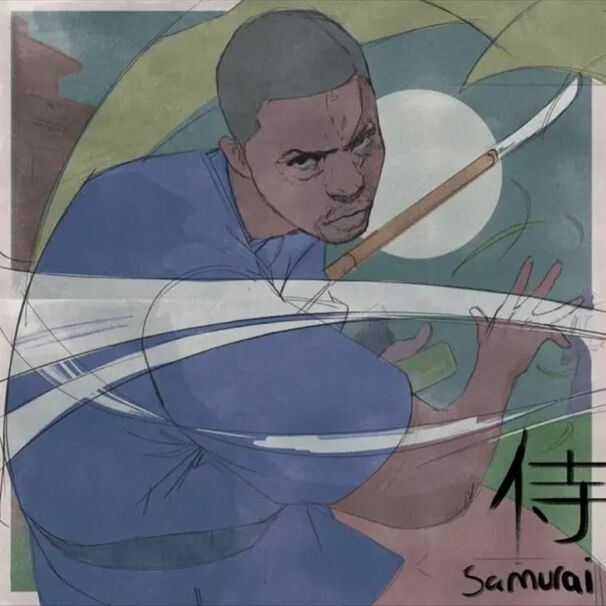
„Samurai” to jeden z singli amerykańskiego rapera Lupe Fiasco, który znajdzie się na zapowiadanym na 28 czerwca 2024 roku dziewiątym pełnowymiarowym albumie studyjnym Artysty. Wydawnictwo noszące tytuł „Samurai” będzie następcą projektu „DRILL MUSIC IN ZION” z 2022 roku.
Omawiany utwór oddaje istotę współczesnego wojownika, używając żywych obrazów i skomplikowanej gry słów, aby przekazać głębokie przesłanie. Piosenka przygotowuje słuchacza do wyruszenia w podróż z tytułowym samurajem, który jest nie tylko postacią historyczną, ale metaforą reprezentującą siłę, mądrość i odporność okazywane w obliczu wyzwań. Refren podkreśla kunsztowny charakter umiejętności rapu bojowego samuraja, nawiązując do mistrzostwa i precyzji wymaganej do pokonywania przeszkód życiowych.
W pierwszej zwrotce Fiasco maluje obraz świata samurajów, pełen zawiłych szczegółów i metaforycznego języka. Teksty wywołują poczucie zwiększonej świadomości i celu. Nawiązanie do przemocy gangów i potrzeby życzliwości w dzisiejszym klimacie zestawia szlachetne intencje samurajów z trudną rzeczywistością świata. Symbolika wejścia w centrum huraganu symbolizuje odwagę i zdolność do bezpośredniego stawiania czoła wyzwaniom.
Druga zwrotka zagłębia się w charakter samuraja, przedstawiając postać jednocześnie pokorną i niezwykłą. Samuraj jest przedstawiany jako artysta i gwiazda, którego nie definiuje przepych czy bogactwo, ale prawdziwy talent i pasja. Wzmianka o muzyce jazzowej i żywności organicznej podkreśla związek samurajów z kulturą i prostotą. Końcowe wersy sugerują chwilę wytchnienia i refleksji, ukazując człowieczeństwo samuraja w chaotycznym świecie.
Singiel „Samuraj” w misterny sposób splata elementy siły, kunsztu i autentyczności, tworząc fascynujący portret współczesnego wojownika. Piosenka zachęca słuchaczy do refleksji nad odpornością i wdziękiem w obliczu przeciwności losu, ucieleśniając ducha współczesnego samuraja dostosowanego do obecnej złożonej rzeczywistości.






Komentarze (0)