
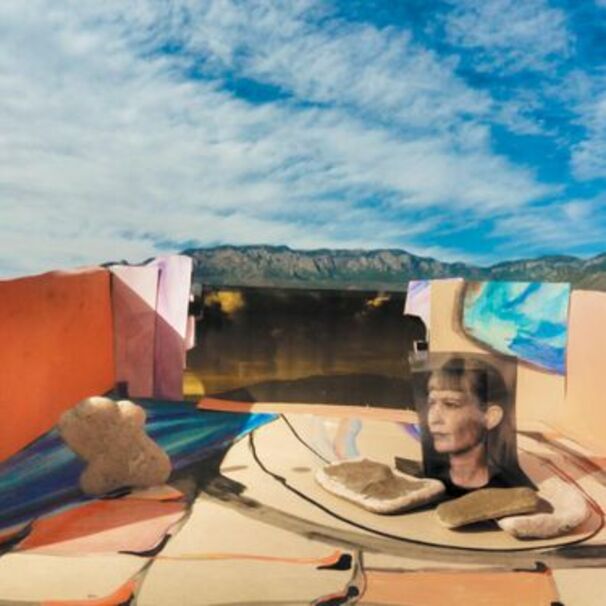




Tekst piosenki
[Verse 1]
There was a painter
In my first studio space that I remember
She used to attach
Her own hair onto her paintings
They were stacked in the hallway
Depicting faces
Desperate but hopeful
[Verse 2]
A row of death masks
Fusing life and death together
I mean, life and art, or is it death?
Or maybe it’s just me?
[Pre-Chorus 1]
At times, I have been
Obsessed with connecting
To materials and textures
And I dreamt of having
[Chorus 1]
A face made of marble
A face made of marble
A face made of marble
[Verse 3]
How do you kiss, how do you kiss
A piece of marble
Or a piece of gold?
I’ve always tried, I’ve always tried
To prove that I’m the living
Connecting dead parts, dead parts, dead parts
[Pre-Chorus 2]
Once I tried acting
I was the virgin in the cast
Like I wasn’t quite human
Performing alabaster
[Chorus 2]
An empty canvas
The shape around the others
In a silent pageant
Away from emotion
Now I rearrange objects
That my friend made for my show
I’m not sure if these are art
Or just stuff she made for me
[Post-Chorus]
But I rearrange them on the countertop
Like I’m examining the stage plot
Working on my performance
Examining the borders, the borders
Living my text
Two dead parts (Two dead parts)
Two still-lifes (Two still-lifes)
Tłumaczenie piosenki
Analiza piosenki
Ten utwór eksploruje złożone relacje między sztuką, życiem, śmiercią a tożsamością artysty. Rozpoczyna się wspomnieniem malarki, która wplatała własne włosy w swoje obrazy, przedstawiające twarze określane jako „desperackie, lecz pełne nadziei”, przypominające „szereg masek pośmiertnych”. Ten obraz od razu zaciera granice między życiem, sztuką a śmiertelnością, inspirując narratora do refleksji nad własną obsesją na punkcie materiałów i marzeniem o posiadaniu „twarzy z marmuru”. To pragnienie zimnej, trwałej, być może pozbawionej emocji fasady, symbolizuje dążenie do artystycznej doskonałości lub pewnej formy oderwania.
W drugiej części narrator zmaga się z próbą udowodnienia własnej żywotności poprzez „łączenie martwych części”, co kontrastuje z ideałem marmurowej, nieczułej twarzy. Doświadczenie aktorskie, gdzie czuł się „nie do końca ludzki, odgrywając alabaster”, wzmacnia ten motyw. Współcześnie, aranżowanie przedmiotów stworzonych przez przyjaciółkę staje się metaforą pracy nad własnym „performansem” życiowym – badaniem granic i „przeżywaniem własnego tekstu”. Ten nieustanny proces twórczy polega na integrowaniu „martwych części” lub „martwych natur” – być może przeszłych doświadczeń, elementów artystycznych czy aspektów samego siebie – w spójną, odgrywaną egzystencję, ciągle kwestionując naturę sztuki i osobistej tożsamości.







Komentarze (0)