





Tekst piosenki
[Verse 1]
Bitterness and burden
Curses rest on thee
Solitaire and sorrow
All eternity
Save the Earth and claim perfection
Deem the mass and blame rejection
Hold the pose, fein perception
Grudges break your back
[Pre-Chorus]
All you bear
All you carry
All you bear
Place it right on
Right on me
[Chorus]
Die as you suffer in vain
Own all the grief and the pain
Die as you hold up the skies
Atlas, rise!
How does it feel on your own?
Bound by the world all alone
Crushed under heavy skies
Atlas, rise!
[Verse 2]
Crucify and witness
Circling the sun
Bastardized in ruin
What have you become?
Blame the world and blame your maker
Wish ’em to the undertaker
Crown yourself the other savior
So you carry on
[Pre-Chorus]
All you bear
All you carry
All you bear
Place it right on
Right on me
[Chorus]
Die as you suffer in vain
Own all the grief and the pain
Die as you hold up the skies
Atlas, rise!
How does it feel on your own?
Bound by the world all alone
Crushed under heavy skies
Crushed under heavy skies
Atlas, rise!
[Instrumental]
[Verse 3]
Masquerade as maker
Heavy is the crown
Beaten down and broken
Drama wears you down
Overload, the martyr stumbles
Hit the ground and Heaven crumbles
All alone the fear shall humble
Swallow all your pride
[Pre-Chorus]
All you bear
All you carry
All you bear
Place it right on
Right on me
[Chorus]
Die as you suffer in vain
Own all the grief and the pain
Die as you hold up the skies
Atlas, rise!
How does it feel on your own?
Bound by the world all alone
Crushed under heavy skies
Crushed under heavy skies
Atlas, rise!
Tłumaczenie piosenki
[Zwrotka 1]
Gorycz i brzemię
Jesteś przeklęty
Pasjans i smutek
Na wieki
Ratujesz świat, żądasz perfekcji
Osądzasz tłumy i obwiniasz za to, że cię odrzucili
Nie wychodzisz ze swojej pozy, ciągle czujny
Żal i zniechęcenie osłabiają twoje barki
[Przedrefren]
Wszystko, co musisz znosić
Wszystko, co dźwigasz na swych barkach
Wszystko, co musisz znosić
Oddaj
Oddaj to mi
[Refren]
Umierasz, cierpiąc na próżno
Zżera cię żal i ból
Umierasz, podtrzymując niebo
Atlasie, powstań!
Jak smakuje samotność?
Sam dźwigasz cały świat
Przytłacza cię ciężar niebios
Atlasie, powstań!
[Zwrotka 2]
Ukrzyżuj i bądź świadkiem
Okrążeń słońca
Poległy wypaczony
Spójrz, kim się stałeś
Możesz obwiniać świat i swojego stwórcę
Pragniesz ich śmierci
Ukoronowałeś się na zbawiciela
Więc w tym trwasz
[Przedrefren]
Wszystko, co musisz znosić
Wszystko, co dźwigasz na swych barkach
Wszystko, co musisz znosić
Oddaj
Oddaj to mi
[Refren]
Umierasz, cierpiąc na próżno
Zżera cię żal i ból
Umierasz, podtrzymując niebo
Atlasie, powstań!
Jak smakuje samotność?
Sam dźwigasz cały świat
Przytłacza cię ciężar niebios
Atlasie, powstań!
[Zwrotka 3]
Twórca maskarady
Korona strasznie ci ciąży
Pokonany i załamany
Ta farsa pozbawia cię sił
Zbyt wielki ciężar, męczennik się potyka
Przewracasz się, niebo się rozpada
Zupełnie sam, upokorzony i przestraszony
Przełknij swoją dumę
[Przedrefren]
Wszystko, co musisz znosić
Wszystko, co dźwigasz na swych barkach
Wszystko, co musisz znosić
Oddaj
Oddaj to mi
[Refren]
Umierasz, cierpiąc na próżno
Zżera cię żal i ból
Umierasz, podtrzymując niebo
Atlasie, powstań!
Jak smakuje samotność?
Sam dźwigasz cały świat
Przytłacza cię ciężar niebios
Przytłacza cię ciężar niebios
Atlasie, powstań!
Analiza piosenki
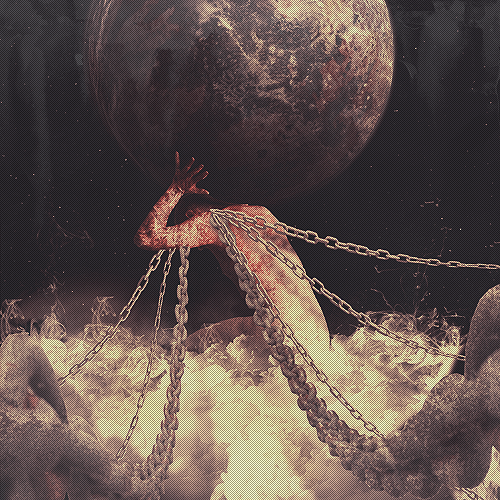
Korzystając z odwołań do mitologicznego Atlasa, Hetfield rysuje przed nami obraz człowieka złamanego przez ciężar problemów, z jakimi się zmaga. Sam tytułowy tytan jest traktowany tutaj raczej jako symbol, chociaż oczywiście nic nie stoi na przeszkodzie, by interpretować ten kawałek dosłownie. Bohater „Atlas, Rise!” ma jednak wiele wspólnego z tytanem, dźwigającym na swych plecach ciężar naszej planety. Ten człowiek dźwiga równie przytłaczający bagaż – jego cierpienia, porażki i demony, które cały czas coraz bardziej rosną i stają się trudniejsze do utrzymania.
Autor nawołuje bohatera do tego, by podzielił się swymi problemami, zdjął ich z siebie chociaż trochę. Niestety widzimy, że zamiast tego nasz „Atlas” odpowiedzialność za swoje cierpienia woli zrzucić na świat i Boga. Woli widzieć siebie w roli ofiary, dzięki czemu chociaż na chwilę odzyskuje część swych sił i pierwszy raz od dawna ma motywację do tego, by żyć dalej. Nie trwa to jednak długo. Odwrócenie się od świata okazuje się tylko chwilowym lekarstwem. Bohater w końcu załamuje się i uświadamia sobie, że to on sam doprowadził się do takiego stanu.
James przedstawia tę historię po to, by uświadomić nam, że gdy rzeczywistość staje się zbyt przytłaczająca, oddzielenie się od innych nie jest rozwiązaniem. Powinniśmy szukać pomocy, zamiast przed nią uciekać, czy ślepo wierzyć w swą wszechmocność. Razem znacznie łatwiej uporać się z problemami, w pojedynkę może nam się nie udać.











Komentarze (0)